





Every few weeks, Dr. Vanessa Cullins, a board-certified obstetrician/gynecologist and vice president for medical affairs at Planned Parenthood® Federation of America, will be answering your questions here. To ask her your own question, click here.
Dear Dr. Vanessa, I heard IUDs can cause infertility. Is that true?
It’s a common myth, but it’s not true. IUDs (intrauterine devices) — increasingly referred to as IUCs (intrauterine contraceptives) — are among the safest, most effective, and least expensive methods of birth control available. In fact, they are the most popular form of reversible birth control in the world. More than 85 million women use IUDs.
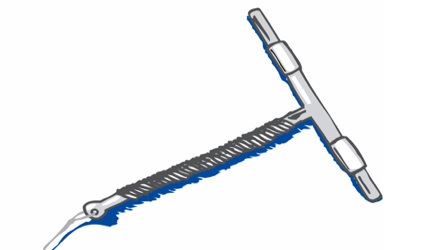
An IUD is a small plastic device that a doctor can put in the uterus. One type — Paragard —contains copper and lasts for 12 years. The other — Mirena — slowly releases a hormone and lasts for five years. IUDs work by keeping sperm from joining with eggs. They are more than 99 percent effective at preventing pregnancy.
The myth about IUDs and infertility started in the 1980s. An insufficiently tested, defective brand of IUD — the Dalkon Shield — had to be removed from the market because of the damage it caused, including infections that led to infertility. Today’s IUDs are safe, effective, and do not cause infertility.
Sexually transmitted infections (STIs) cause infertility, not IUDs. If you have an IUD inserted while you have an STI, you increase your chance of infertility. That’s why most clinicians test for STIs before inserting IUDs.
IUDs do not protect against STIs. That’s why women who use methods such as IUDs, hormones, diaphragms, sponges, or cervical caps need to protect themselves with condoms whenever there’s a risk of infection.
[READ PART 2 OF THIS DISCUSSION HERE]
Best wishes for your good sexual health,
Vanessa
Planned Parenthood
Vanessa Cullins, MD, MPH, MBA, is a board-certified obstetrician/gynecologist and vice president for medical affairs at Planned Parenthood® Federation of America.